We often stare at the bare walls of our homes and wonder how we can make them pop. Finding the right way to display your artwork can totally change a room. But for newbies, it can also feel a bit tricky. The key is achieving balance.
You want your art to complement the space. You should not overpower it or get it lost in the jumble. You could have a small studio or a spacious living room, the right wall art placement can tie the whole room together. Here are some great tips on Wall art placement 101 and how to create a balanced look in your home and on your walls.
Begin with a Vision
Do this before you start hammering nails into the wall. Sit down and take a moment to think about the ambiance you want to create in that room.
Do you want the space to feel cozy and intimate? Or more modern and open?
Your art should help enhance this overall feeling.
How to do it:
• Match your art to the room's style. If the room is a minimalist space, you might want a few, simple pieces. You should not crowd the room. For a more eclectic vibe, a gallery wall could bring in diverse colors and styles.
• Consider the room’s function. For example, in a living room where people gather, go for large pieces or groupings that draw the eye and spark conversation. In a bedroom, you might prefer softer, calming pieces that promote relaxation.
Select the Right Spot
Carefully decide where your art will go. The key to balanced placement is choosing spots that make sense for both the room layout and the art itself.
How to do it:
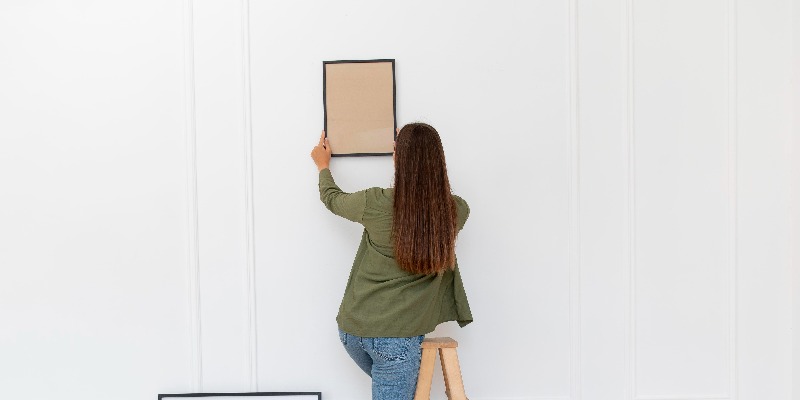
• Eye level is key. For most artwork, aim to hang it at eye level. This should be about 57-60 inches from the floor. This makes sure it’s easy to view. It doesn’t feel awkwardly high or low.
• Create groupings for a space. If you are arranging several pieces together, you should make sure they are placed close. They should be near enough to create a cohesive look. But always leave enough breathing room between them. You don’t want your pieces to feel crowded. Neither they should be too spread out. A good rule of thumb is to leave about 2-3 inches between frames in a gallery wall.
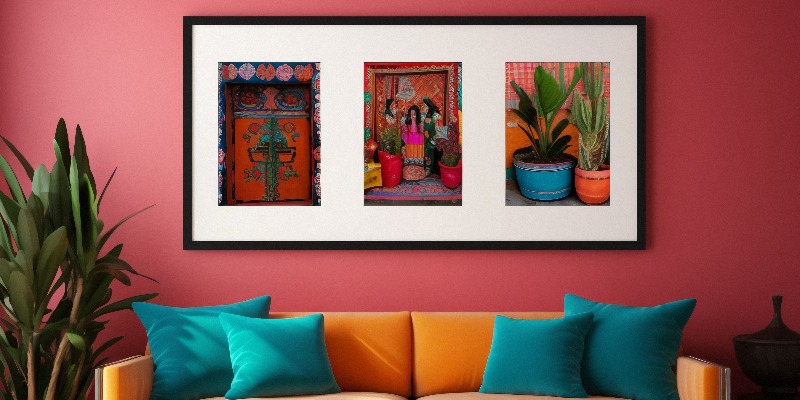
• Go above the furniture. When hanging art above furniture like a couch or bed, make sure it’s roughly 2/3 the width of the furniture piece. This keeps things proportionate and balanced.
Combine Different Sizes and Styles
A great way to add visual interest to your walls is by mixing different sizes and styles of art.
This does not mean you have to have a chaotic collection of mismatched pieces, though! The goal is harmony. This means even when working with varied pieces.
How to do it:
• Vary sizes thoughtfully. You should combine large, bold pieces with smaller, more delicate ones. This creates a dynamic display that keeps the eye moving across the wall. Just make sure there’s enough space around each piece to allow it to stand out.
• The frame should have consistency. While it’s fun to mix up the artwork, it’s best to stick to a common theme with the frames. Whether it’s the color or style of the frames, consistency here will make everything feel unified.
• Utilize the color as a guide. If your artwork has similar tones or a common color palette, they’ll naturally flow together. If you have a variety of colors, try to balance them out with neutral tones to keep the space feeling cohesive.
Select Symmetry (or Go for Asymmetry)
Symmetry can be a great way to create balance in a room. This is especially applicable when you want a formal, organized feel.
However, asymmetrical arrangements can feel more relaxed and modern. Choose what fits your space best.
How to do it:
• In case of symmetry place your pieces in a grid or in line with each other. Think of two pieces of art hanging side-by-side, or a pair of frames
• If you prefer a more laid-back asymmetrical look, go for a cluster of pieces in different sizes that are arranged slightly off-center. As long as the grouping feels intentional and not random, this can create a dynamic, more casual visually.
Do Not Overcrowd
While it might be tempting to fill every inch of your wall with art, sometimes less is more. Overcrowding your walls can actually make the room feel more cluttered than it is, so be selective with your pieces.
How to do it:
• Select one big piece or a few smaller ones. Sometimes one large statement piece is all you need to make an impact. If you’re using multiple pieces, make sure to leave ample space around each one so they have room to breathe.
• If you have a smaller space, try to leave some empty wall space between your pieces to prevent the room from feeling overcrowded. Negative space helps the artwork pop.
Experiment with the Layout Before You Commit
It’s always a good idea to try out the layout before drilling holes into the wall. After all, you don’t want to spend hours perfecting your arrangement only to realize it doesn’t work.
How to do it:
• You can lay out pieces on the floor first. Before hanging your art, arrange the pieces on the floor to get a feel for the layout. This lets you play around with spacing and see how the pieces interact without committing to anything on the wall.
• Try paper templates first. If you are working with multiple pieces, cut out pieces of paper in the same size as your artwork and tape them to the wall. This gives you a chance to visualize the arrangement and make sure everything fits without making a mess.
Wrapping It Up
These were some tips for wall art placement in a balanced way. Finding the right wall art placement is fun. It is a creative process. It is all about finding the right balance. Doing experimentation, and making your space reflect your personal style.
Always take your time, trust your instincts, and soon enough, your walls will look like they belong in a magazine!